How to Install Gutters: What to Expect, How Long It Takes, and When to Hire a Pro
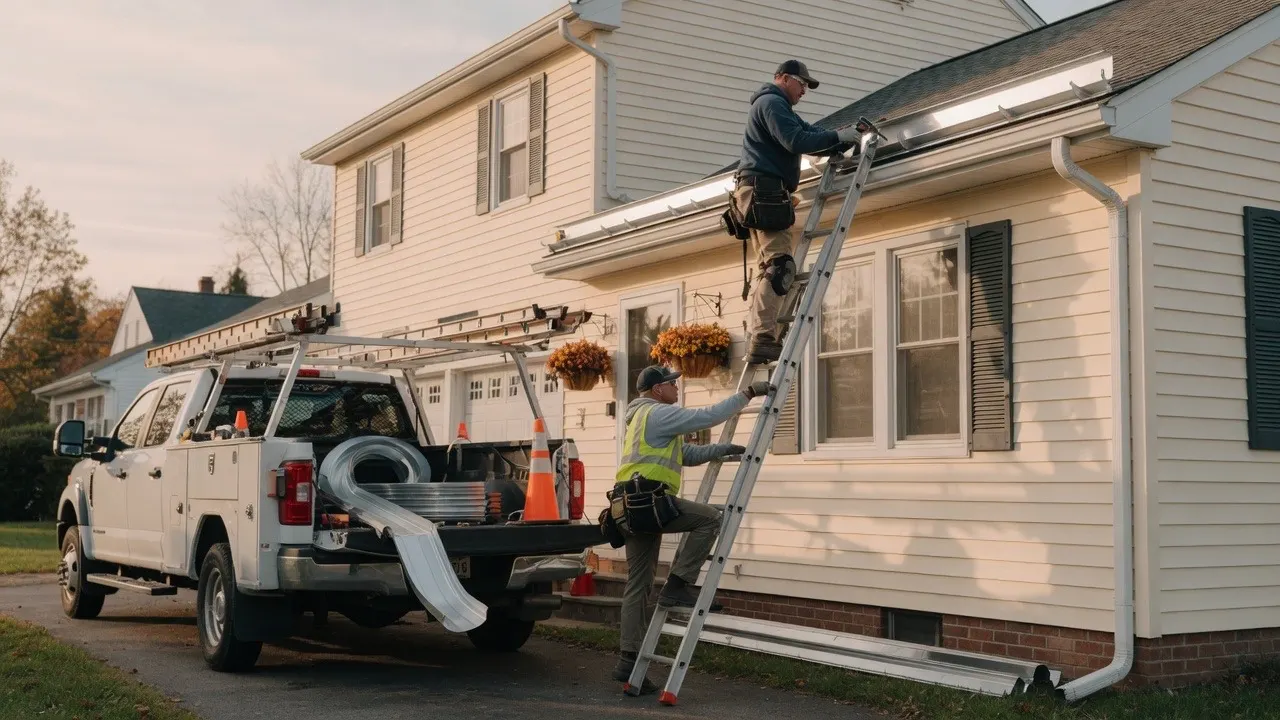
Gutter installation is the job of hanging a sized, pitched trough on your eaves so roof water leaves the house instead of soaking the fascia, siding, and soil at the foundation. Done well, a seamless aluminum system lasts 20–30 years. Done poorly, it overflows in the first real storm.
This is the process guide: what the work is, how long it takes, what a crew does on site, and how far DIY actually goes.
What is gutter installation?
A complete install has five parts, whether the crew says so or not:
- Sizing — 5-inch K-style for most homes; 6-inch where the roof is large, steep, or in a heavy-rain market.
- Layout — downspout locations, high points, and a pitch of about ¼ inch per 10 feet toward each outlet.
- Attachment — hidden hangers into solid fascia every 2–3 feet, not a spike every 5 feet.
- Discharge — downspouts, elbows, and extensions that drop water several feet from the foundation.
- Verification — a hose test. Water should move, not pond, and nothing should drip behind the gutter.
“Rain gutter installation” is the same job. There is no separate rain-gutter trade.
If you are still deciding whether you need a new system or a fix, start with signs you need gutter repair. For budget, see how much gutter installation costs.
How long does gutter installation take?
| Job | Typical time on site |
|---|---|
| Simple one-story, 120–160 ft, easy access | 4–8 hours (often same day) |
| Average home, 160–220 ft, some two-story runs | 1 day |
| Large or complex roof, 220+ ft, many valleys | 1–2 days |
| Install plus fascia replacement | Add a half day to a full day |
| Install plus gutter guards | Usually still the same day on an average house |
HomeGuide’s 2025–2026 guidance matches what we hear from directory pros: most residential installs finish in 1–2 days; a clean single-story can be done in 4–6 hours. Angi reports the same one-to-two-day window for a replacement.
What isn’t in those hours: the estimate visit (30–60 minutes), any wait for coil color, and weather delays. Seamless color is stocked in common whites, browns, and bronzes; a custom bake can add a week.
What to expect during gutter installation
Before the crew arrives
- You should already have a written scope: linear footage, size, gauge, hanger type, downspout count, tear-off, and warranty.
- Clear driveway space for a truck. Seamless shops roll the gutter from a machine in or on the truck.
- Move grills, planters, and cars out from under the eaves. The old system comes down in long, awkward pieces.
- Tell them about pets, kids, and sprinkler lines along the foundation.
The day of
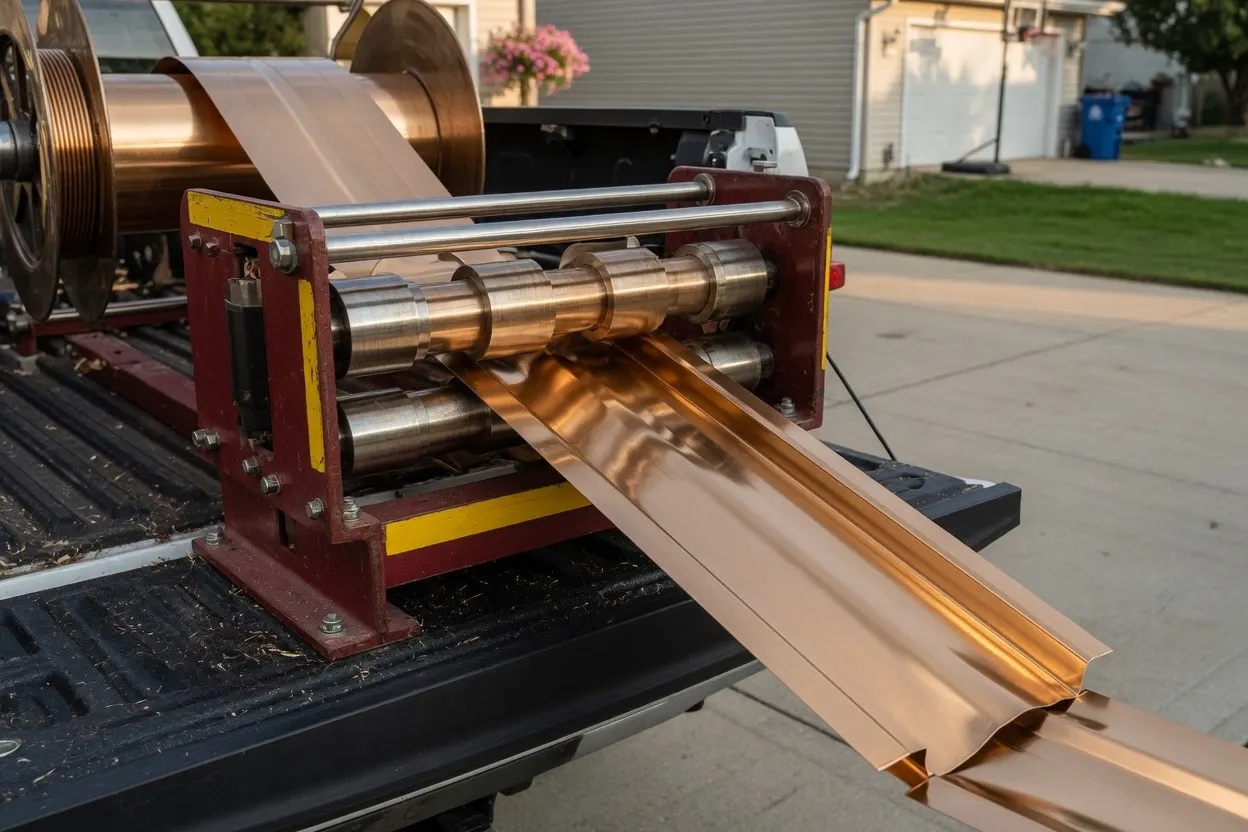
A typical professional sequence:
- Protect and stage. Drop cloths at entries, ladders or planks set, coil loaded.
- Tear-off. Old gutters and hangers come off. Spikes get pulled, not snapped off flush.
- Fascia check. This is the moment they find rot. A good crew stops and shows you before they hang new metal on soft wood.
- Form and hang. Each run is rolled to length, outlets are cut, hangers go in on a string line or laser for pitch.
- Downspouts. Outlets, elbows, and straps. Discharge aimed onto a splash block or into an extension — not against the slab.
- Seal and test. Corners and end caps get sealant. A hose at the high point should reach the downspout without spilling.
- Cleanup. Old metal is hauled (or left if you want the scrap). You get warranty sheets and a walkthrough.
You do not need to be home the entire time, but someone should be reachable if they find rotten fascia or a framing surprise. Confirm how they want to be paid (balance on completion is standard; large deposits are a red flag).
After they leave
Walk the house after the next rain. Look for streaks on the fascia, puddles at corners, and downspouts that kick water back toward the wall. Call while the workmanship warranty is fresh.
Put cleaning on the calendar — twice a year without guards, or an inspection every 12–24 months with a quality micro-mesh.
How the pro method works (seamless)
Seamless gutters are formed on a portable roll-former from a coil of painted aluminum. The machine extrudes a continuous K-style (or half-round) profile; the installer cuts it to the exact eave length. Joints exist only at corners and downspout drops.
That is why seamless gutters cannot be a Saturday DIY project. The machine is a business asset — entry-level units start around $8,000 — not a rental-aisle tool.
Quality details that separate a 20-year job from a callback:
- Gauge. .027 is the residential standard; .032 is stiffer. .019 dents if you look at it.
- Hangers. Hidden hangers screwed into fascia, 24–36 inches on center. Closer on two-story and snow-country homes.
- Pitch. About ¼ inch per 10 feet. Long runs may break in the middle with a downspout at each end so the gutter does not have to drop too far.
- Inside the outlet. A drop outlet or a well-cut hole with a flange — not a jagged slot that leaks behind the fascia.
How to install gutters yourself (sectional only)
DIY is reasonable for a single-story shed, porch, or simple ranch eave using 10-foot vinyl or aluminum sections from a home center. It is not reasonable for a two-story house, a steep lot, or a full seamless system.
Safety first
Falls from ladders send hundreds of thousands of people to U.S. emergency rooms every year (CPSC). Gutter work is a common consumer cause. OSHA requires fall protection for workers at 6 feet in construction — treat that as a hint, not a loophole, if you are a homeowner on a 24-foot extension ladder.
- Use a stabilizer so the ladder does not rest on the gutter you are hanging.
- Three points of contact. Have a ground person.
- Do not work on wet or icy fascia.
- Stop if you are tired, dizzy, or reaching sideways.
Tools and materials
Sections, slip connectors, end caps, outlets, downspout, elbows, hidden hangers or brackets, exterior-grade sealant, tin snips, a drill, a level or string line, a tape measure, and a hose.
Steps
- Snap a chalk line on the fascia that falls ¼ inch per 10 feet toward the downspout location.
- Mount hangers along that line every 24–36 inches, into the fascia — not just the drip edge.
- Dry-fit sections. Cut the outlet hole before you hang the piece that gets the downspout.
- Hang, connect, and seal. Every joint is a future leak; use the manufacturer’s connector and a bead of sealant.
- Add downspouts and extend discharge at least 4–6 feet from the foundation.
- Hose test. Fix ponding before you pack up.
If a section will not sit flat, the fascia is wavy or rotten — that is the moment most DIYers should call a local installer instead of forcing the metal.
When to hire a pro
Hire out the job if any of these are true:
- The house is more than one story, or the ground is sloped
- You want seamless (you have no other option)
- The fascia is soft, stained, or already pulling away
- You are in ice-dam, hail, or hurricane country and the detailing matters
- You are not genuinely comfortable on a ladder
A one-day pro visit costs more than a box of vinyl sections. It costs less than a fall, a hidden leak behind new metal, or a foundation repair. Get free quotes from licensed local companies and compare the scope, not just the number.
If you are a contractor trying to price this work, see how to price gutter installation.
Frequently asked questions
What is gutter installation?
Gutter installation is the process of sizing, forming, pitching, and fastening a trough system to the eaves so roof runoff is carried to downspouts and discharged away from the foundation. A professional job includes tear-off if needed, fascia inspection, hangers every 2–3 feet, sealed corners, and a water test.
How long does gutter installation take?
A typical single-family home takes one day. Simple one-story houses can be done in 4 to 8 hours. Larger, multi-story, or complex roofs take one to two days, occasionally three if fascia boards have to be replaced first. Weather and material lead times can add a wait before the crew arrives.
What should I expect during gutter installation?
Expect an on-site measure, a written scope, then a crew with a roll-former truck. They remove the old system, check the fascia, form each run to length, hang it with a slight pitch toward the downspouts, install outlets and downspouts, seal corners, clean up, and run a hose test. You should get warranty paperwork before they leave.
How do you install gutters?
Professionals roll-form seamless aluminum on site, cut outlets, install hidden hangers every 24–36 inches, and pitch the trough about 1/4 inch per 10 feet toward each downspout. Sectional DIY uses 10-foot pieces, slip connectors, and sealant. Seamless work requires a truck-mounted machine and is not a homeowner project.
Can I install rain gutters myself?
You can install sectional vinyl or aluminum on a single-story, simple eave if you are comfortable and safe on a ladder. Full-home seamless systems cannot be DIY — they are formed on a commercial roll-former. Two-story homes, steep grades, and rotten fascia are hire-a-pro jobs. Ladder falls send hundreds of thousands of people to ERs every year.
Related guides
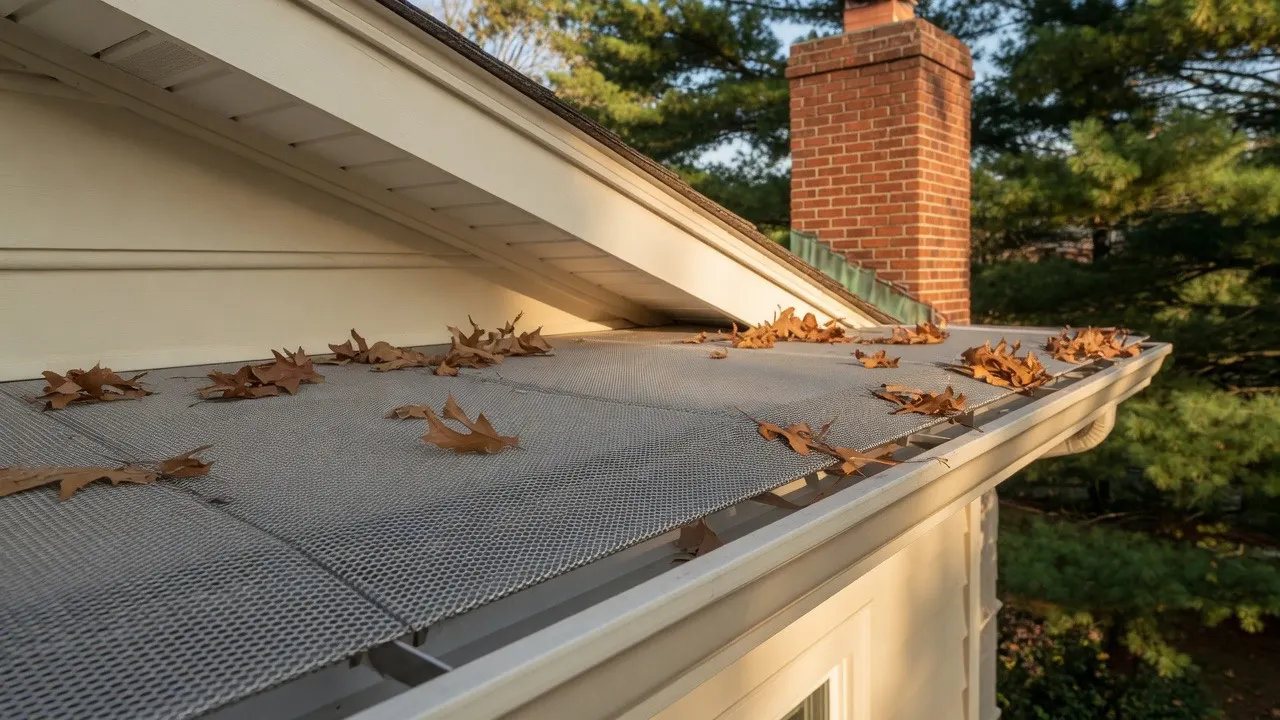 Costs Gutter Guard Installation Cost: What You’ll Pay in 2026 Real 2026 prices for gutter guard installation — local micro-mesh vs. national brands, why some quotes are triple others, and how long the job takes.
 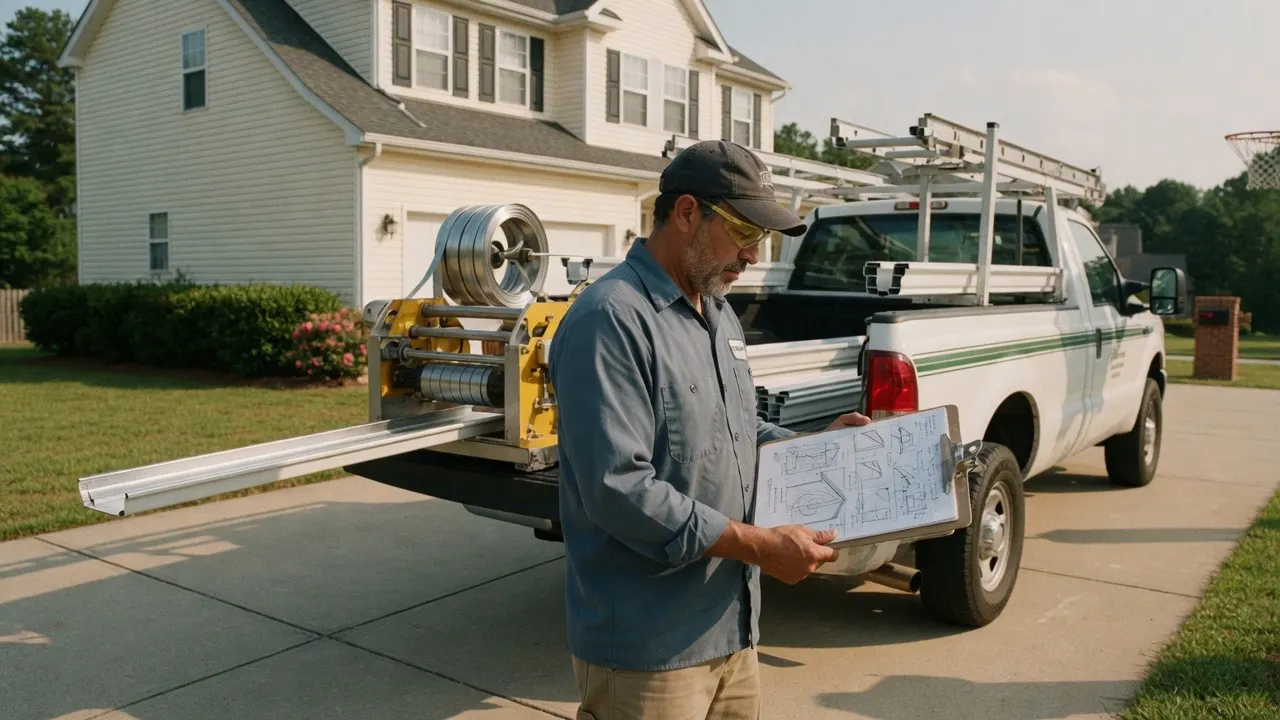 For contractors How to Price Gutter Installation (and Start a Gutter Business) A contractor’s 2026 guide to charging per linear foot, building a real job cost, and what it actually takes to start a seamless gutter shop.
  Costs How Much Does Gutter Installation Cost in 2026? 2026 gutter installation prices by material, home size, and linear foot — plus what a fair quote looks like, why numbers vary, and how to avoid overpaying.
 Get free gutter quotes near you
Tell us about your project and we’ll match you with a trusted local Featured pro. Free, fast, no obligation.